Robert Piguet: Biography and Career of the Swiss-born French Couturier
Early Life and Education
Robert Piguet (6 May 1898 – 21 February 1953) was a Swiss-born fashion designer who established his career in Paris and became one of the notable couturiers of the interwar and post-war periods. He founded the House of Robert Piguet in 1933 and became known for refined women's clothing, carefully constructed silhouettes and an understated approach to elegance. His fashion house also provided early professional opportunities for designers including Christian Dior, Pierre Balmain and Hubert de Givenchy. Piguet's name subsequently became closely associated with the perfumes Bandit and Fracas.
Piguet was born in Yverdon-les-Bains, in the canton of Vaud, Switzerland, into a prominent banking family. His father expected him to pursue a career in finance, but Piguet developed an early interest in fashion and chose to leave Switzerland for Paris in 1918, at the age of 17. His decision met with considerable family opposition.
Sources differ on his year of birth: the Historical Dictionary of Switzerland and the present-day Robert Piguet fragrance house give 1898, while several fashion reference works list 1901.
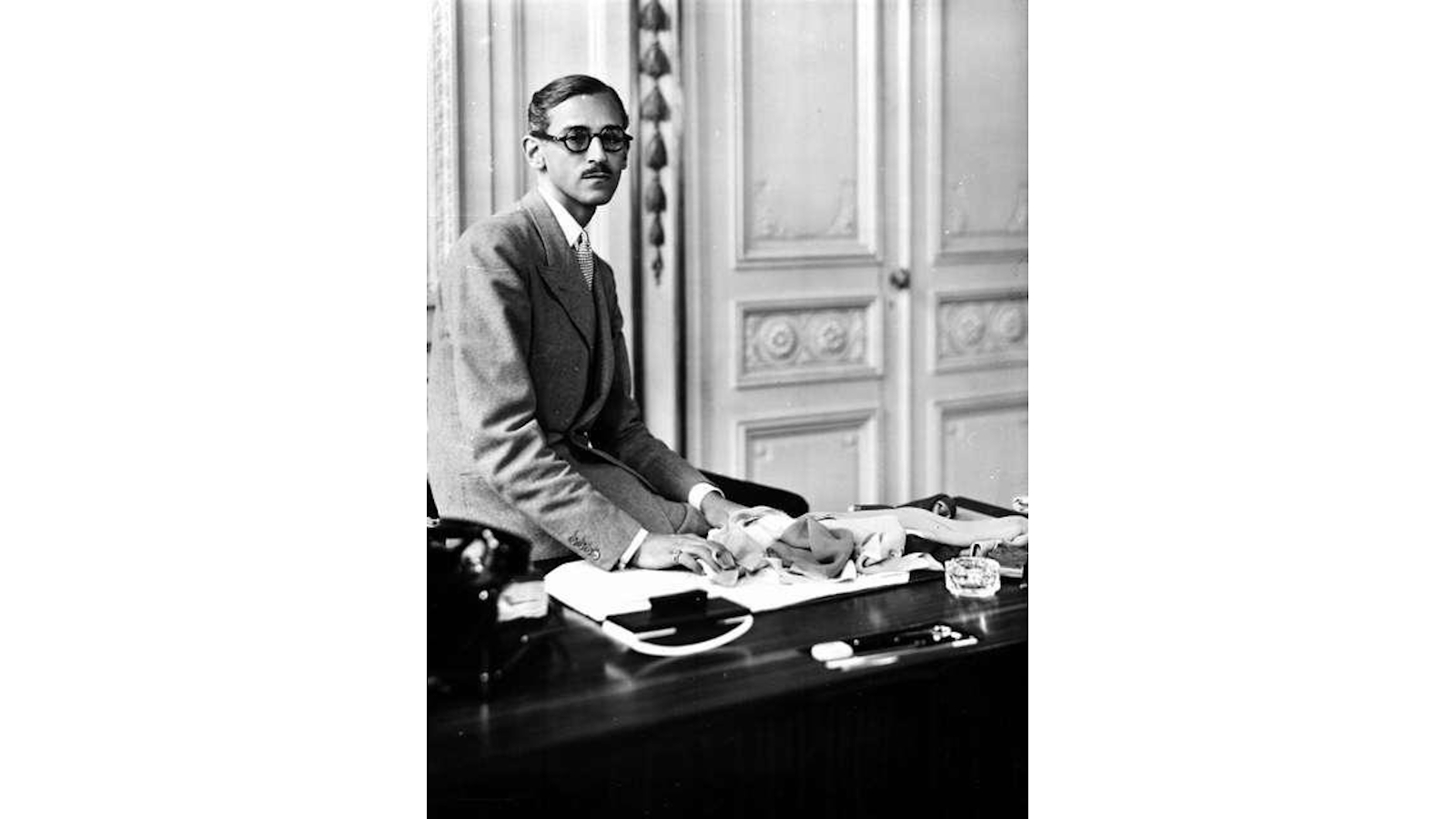
Robert Piguet, Swiss-born couturier who established his fashion house in Paris in 1933
Early Career in Paris
The First Fashion House and Apprenticeship
Piguet initially attempted to establish his own couture business in Paris in 1918. The venture was unsuccessful, and he returned to Switzerland after exhausting the financial resources available to him. He subsequently gained professional experience in established Parisian fashion houses, working with Paul Poiret and the British-founded couture house Redfern.
From 1922, Piguet worked as a modéliste, developing garment models and designs. Poiret was an influential innovator in early twentieth-century fashion, while Redfern was particularly associated with tailored clothing. Experience in both environments helped Piguet develop a design approach that combined precision of cut with an appreciation of colour, proportion and decorative effect.
His early professional years were important to his later success. Rather than relying exclusively on elaborate ornamentation, Piguet increasingly favoured well-proportioned garments whose appeal depended on construction, material and silhouette.
The House of Robert Piguet, 1933–1951
Establishment and Expansion
In 1933, Piguet returned to independent couture, opening a new atelier on Rue du Cirque in Paris. This second venture established his reputation among the city's fashionable clientele. His business expanded, and in 1938 he moved the house to the prestigious Rond-Point des Champs-Élysées, one of Paris's prominent addresses for luxury fashion.
The house served a clientele that included wealthy society women and prominent public figures. Among its customers was the Begum Aga Khan. Piguet also developed connections with writers, artists and theatrical personalities, including Jean Cocteau, Colette and Jean Marais.
His designs were distinguished by their controlled elegance rather than conspicuous extravagance. Day and afternoon clothing often featured restrained decoration, precise tailoring and fine fabrics. Piguet was particularly associated with light grey flannel suits, tailored jackets, coats and dresses that balanced practicality with refinement. Evening designs could be considerably more flamboyant, using stronger colours and more dramatic effects.
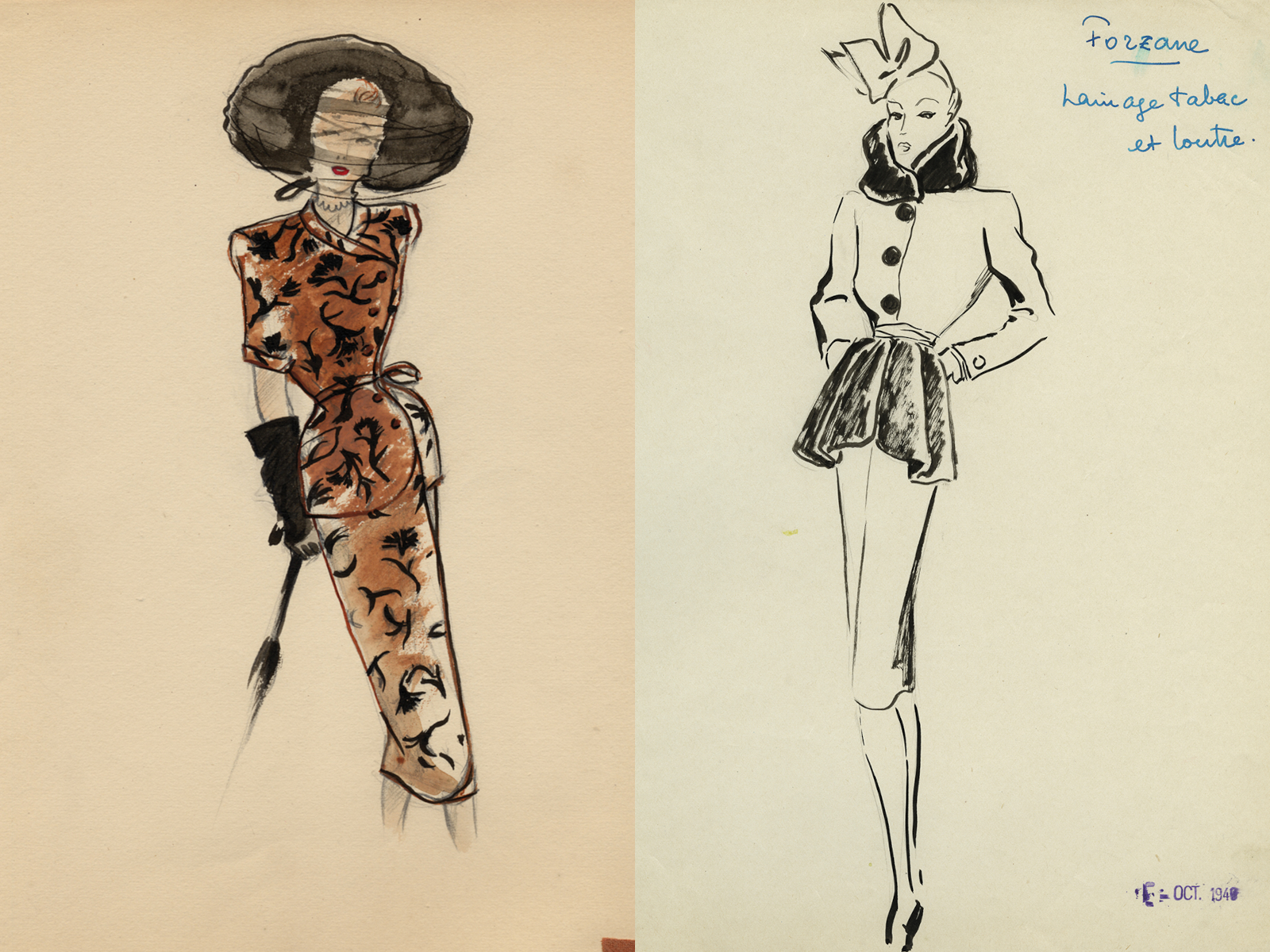
Original designs from the Robert Piguet couture archives. The collection preserves approximately 3,000 sketches and documents associated with the fashion house and designers who worked there
This contrast between restraint and theatricality became a defining feature of the house. Piguet's clothing was sophisticated without being uniformly conservative, and his work reflected an understanding of both traditional couture techniques and changing tastes in modern women's fashion.
Design Philosophy and Notable Collections
Piguet's reputation rested on the quality of his cut and his ability to make simplicity appear luxurious. His designs often relied on proportion and fabric rather than elaborate embellishment, while his eveningwear allowed greater freedom in colour and presentation.
Christian Dior, who worked at Piguet's house before establishing his own label, later recalled:
“Robert Piguet taught me the virtues of simplicity through which true elegance must come.”
The quotation captures the principle most frequently associated with Piguet's influence on twentieth-century couture.
One notable design created during Dior's time at the house was the Café Anglais day dress, remembered for its short, full skirt. The design demonstrated how a relatively simple garment could acquire distinction through its proportions and silhouette.
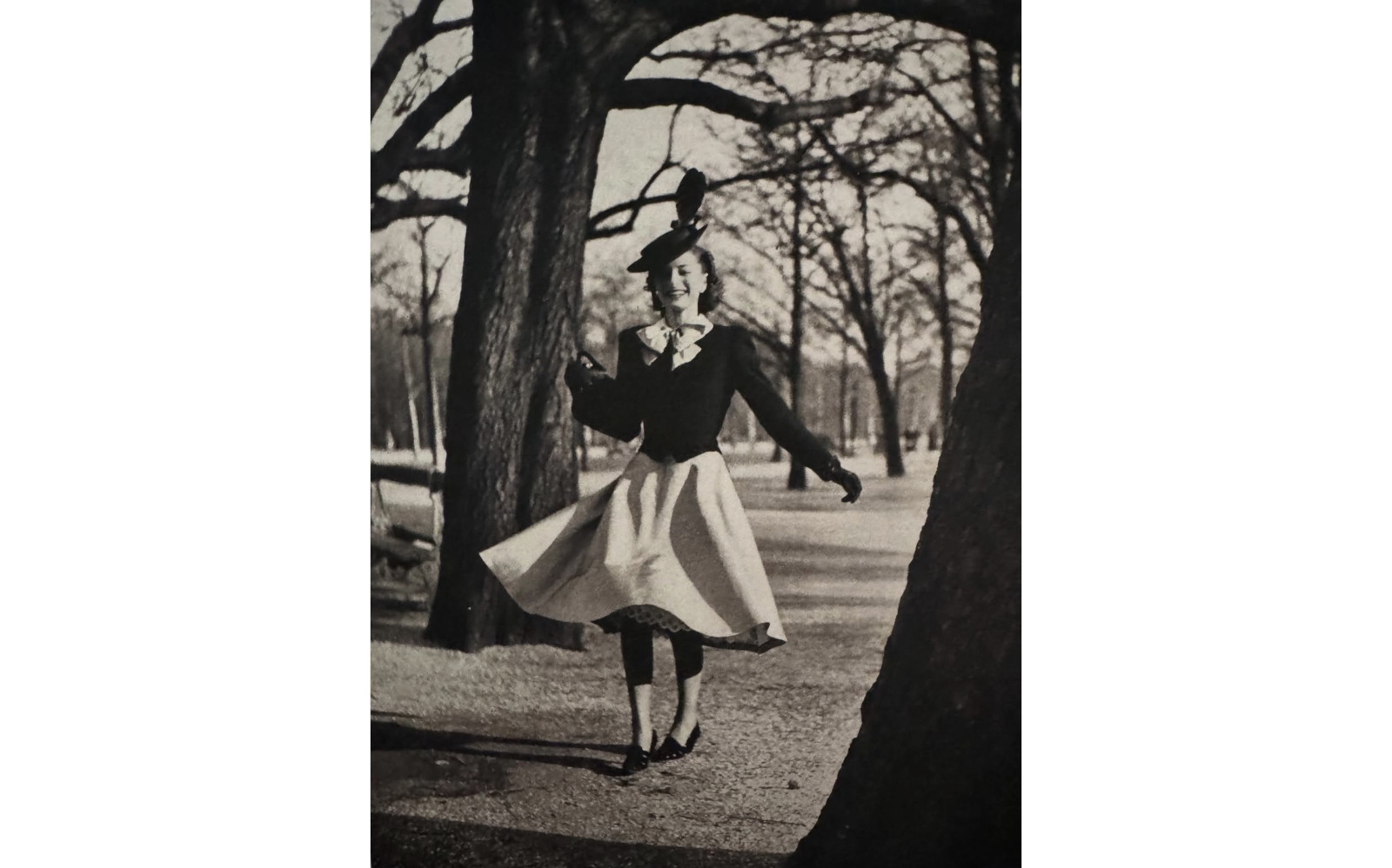
The “Café Anglais” ensemble, designed by Christian Dior for Robert Piguet
Piguet also worked in theatrical costume design. His projects included costumes for productions associated with Jean Cocteau, Paul Claudel and Sacha Guitry. This activity reflected his engagement with the performing arts and his ability to adapt the visual language of couture to the stage.
Designers Trained at the House
One of Piguet's most enduring contributions to fashion history was his role in providing employment and professional experience to designers who later established influential careers of their own.
Christian Dior joined the house in 1937, after working as an illustrator and beginning to pursue fashion design. At Piguet, Dior developed designs for several collections and gained experience in the practical demands of couture. His work there helped establish the design principles that he would later develop independently.
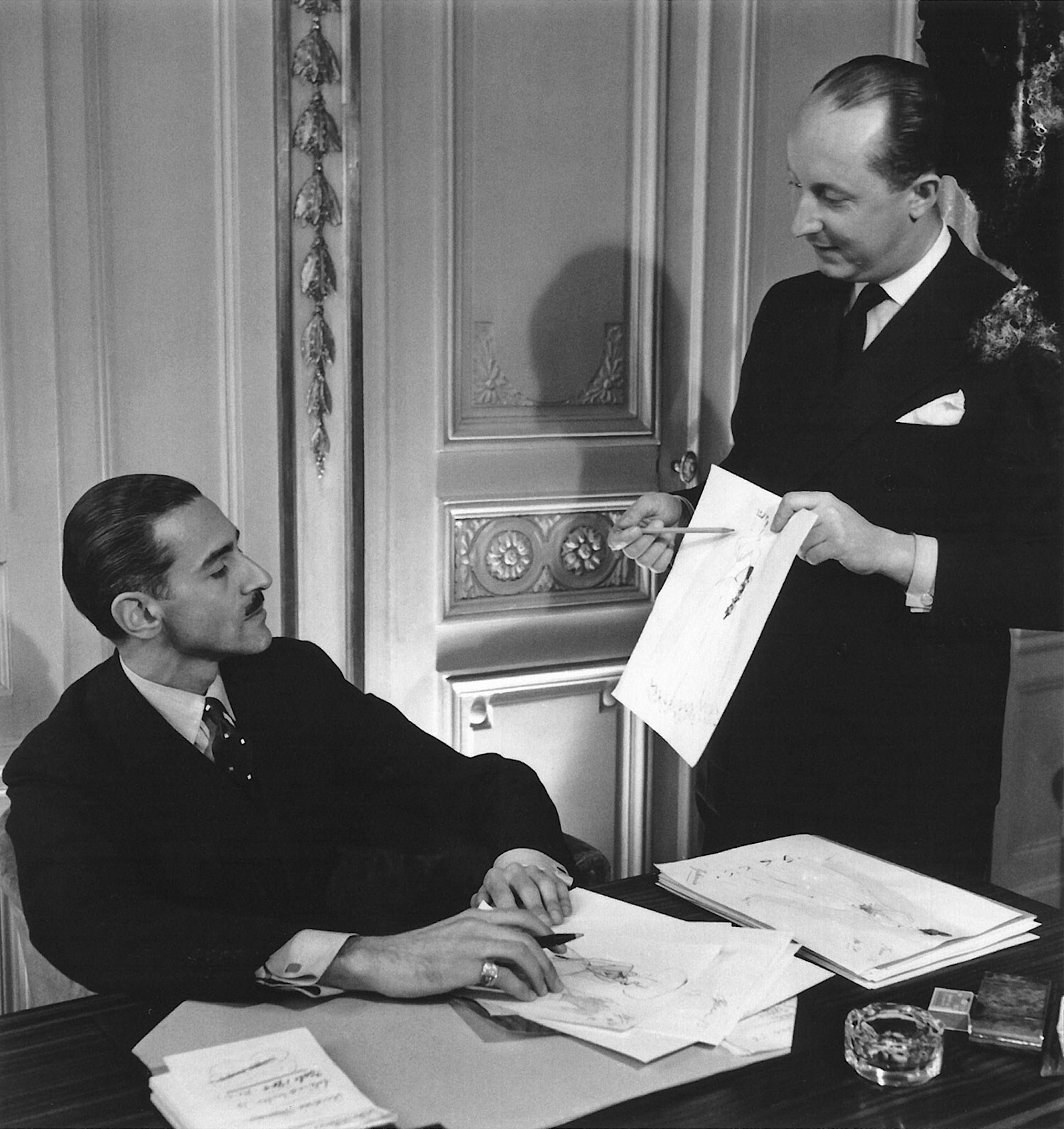
Christian Dior at the House of Robert Piguet, c. 1939
Pierre Balmain also worked at Piguet's house, where he collaborated with Dior before founding his own couture house in 1945. Hubert de Givenchy and Marc Bohan were among the other designers associated with Piguet's establishment; James Galanos also gained early professional experience in the Parisian fashion world through the house.
The sequence of designers who passed through Piguet's atelier gave the business an influence that extended beyond its own collections. Its importance lay not only in the clothes sold under his name but also in the professional environment he provided for the next generation of couturiers.
Closure of the Fashion House
At the height of its activity, the House of Robert Piguet employed approximately 400 people. However, Piguet's health deteriorated, preventing him from continuing his work. The business closed in 1951, bringing his active couture career to an end.
The closure did not immediately eliminate the Piguet name from fashion and beauty. His perfumes continued to be associated with the house, and they eventually became the principal surviving expression of his brand.
Robert Piguet and the History of Perfumery
Collaboration with Germaine Cellier
Piguet's perfume business developed alongside his couture work. His most consequential fragrance collaboration was with Germaine Cellier, a French perfumer recognised for bold compositions and an unusually distinctive approach to fragrance creation.
Their partnership produced several perfumes that became important in twentieth-century perfumery. Rather than treating fragrance simply as an accessory to clothing, Piguet approached it as another means of expressing the character of his house.
Bandit (1944)
Bandit, introduced in 1944, was among Piguet's earliest and most unconventional fragrances. Created by Cellier, it was associated with a provocative couture presentation inspired by a “bad boy” theme. Models appeared wearing masks and carrying theatrical weapons, reinforcing the fragrance's rebellious identity.
The perfume became known for its leather-oriented, green chypre character, departing from more conventionally delicate interpretations of feminine fragrance. Its presentation and composition helped establish the adventurous image later associated with the Piguet perfume name.
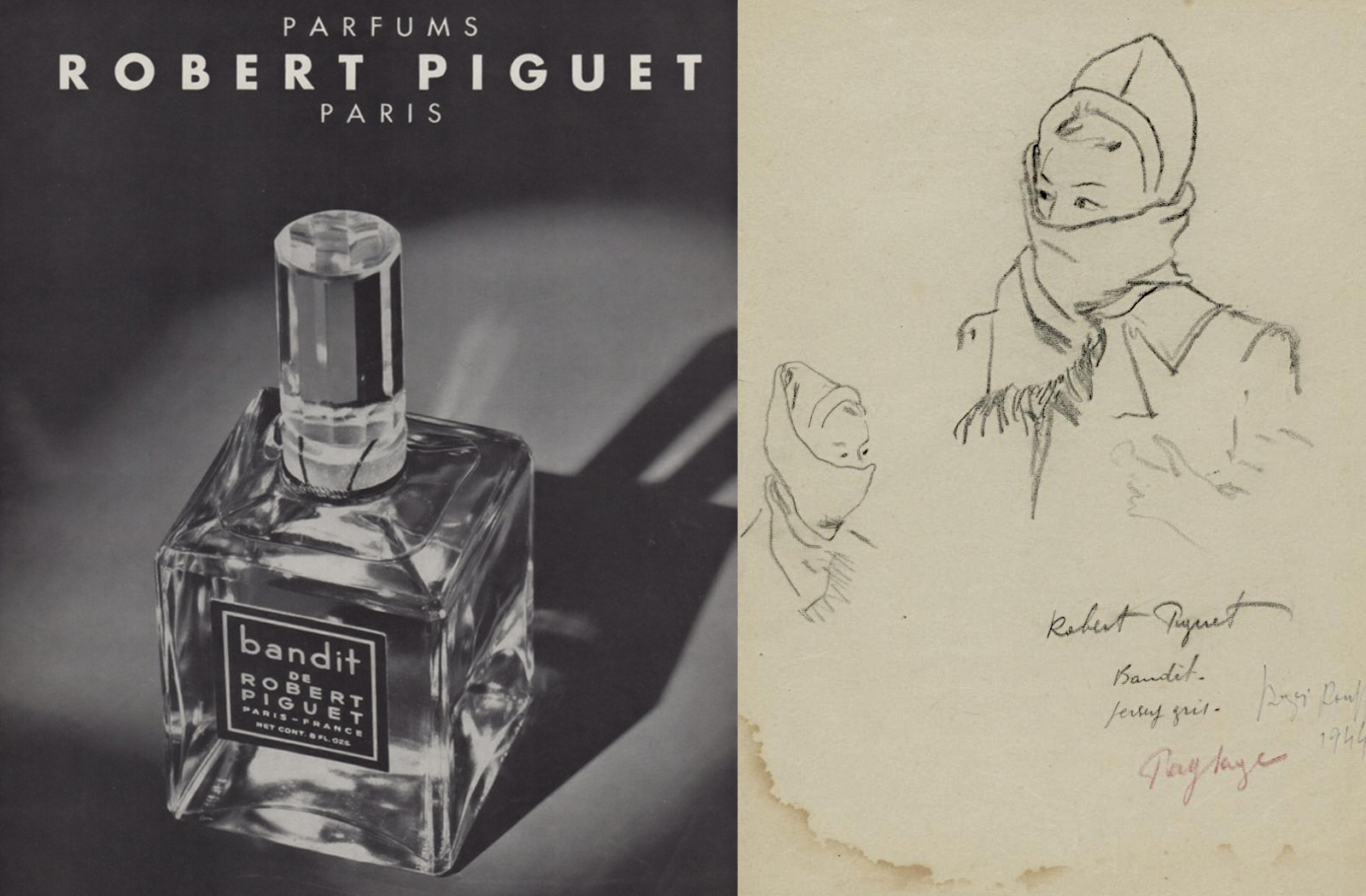
Left: Bandit, the 1944 Piguet fragrance known for its distinctive leather-oriented character. Right: A 1944 fashion drawing associated with Robert Piguet’s “Bandit” design, by Roger Rouffiange. Palais Galliera, Paris
Visa (1945)
Visa, launched in 1945, was another product of Piguet's perfume activities. Historical fragrance accounts associate it with Cellier and Jean Charles. Although less celebrated today than Bandit and Fracas, it formed part of the early development of the house's fragrance portfolio.
Fracas (1947–1948)
Fracas became Piguet's best-known perfume and one of Cellier's most celebrated creations. Sources commonly date its introduction to either 1947 or 1948. Its composition is particularly associated with tuberose, presented in a rich, powerful floral structure.
Unlike the restrained elegance of many traditional feminine perfumes, Fracas was notable for its intensity and pronounced floral character. It developed a lasting reputation among enthusiasts and became a reference point in the history of white-floral perfumery.
The fragrance's subsequent recognition extended beyond its initial release. A modern version of Fracas was inducted into the Fragrance Foundation's Hall of Fame in 2006, reflecting its continued cultural and commercial significance.
Baghari and Later Fragrances
Baghari, introduced in 1950, was the last major fragrance associated with Piguet's lifetime. Its launch preceded the closure of the couture house by one year and his death by approximately three years.
After his death, perfumes continued to appear under the Robert Piguet name. Later releases included Futur, associated with the 1960s, and Cravache, introduced in 1963. These launches helped preserve the name beyond the period in which Piguet himself had been active.
Death and Legacy
Robert Piguet died in Lausanne, Switzerland, on 21 February 1953, aged 54. Although his couture house had closed in 1951, his influence continued through the designers who had worked under him and the fragrances associated with his name.
His professional legacy occupies two distinct areas. In fashion, he is remembered for his disciplined approach to cut and simplicity, as well as for providing early opportunities to Christian Dior, Pierre Balmain, Hubert de Givenchy and other designers. In perfumery, the continuing reputation of Bandit and Fracas has ensured that his name remains associated with influential twentieth-century fragrance design.
Piguet's surviving archive, comprising approximately 3,000 original designs, photographs and documents, is held by the Musée suisse de la Mode in Yverdon-les-Bains, his birthplace. The collection provides documentary evidence of his couture work and the development of his fashion house.
The modern Robert Piguet brand is principally associated with perfumery rather than an operating couture house. Its continued use of his name reflects the lasting reputation of the original fragrances and the historical importance of Piguet's contribution to Parisian fashion.